About Me
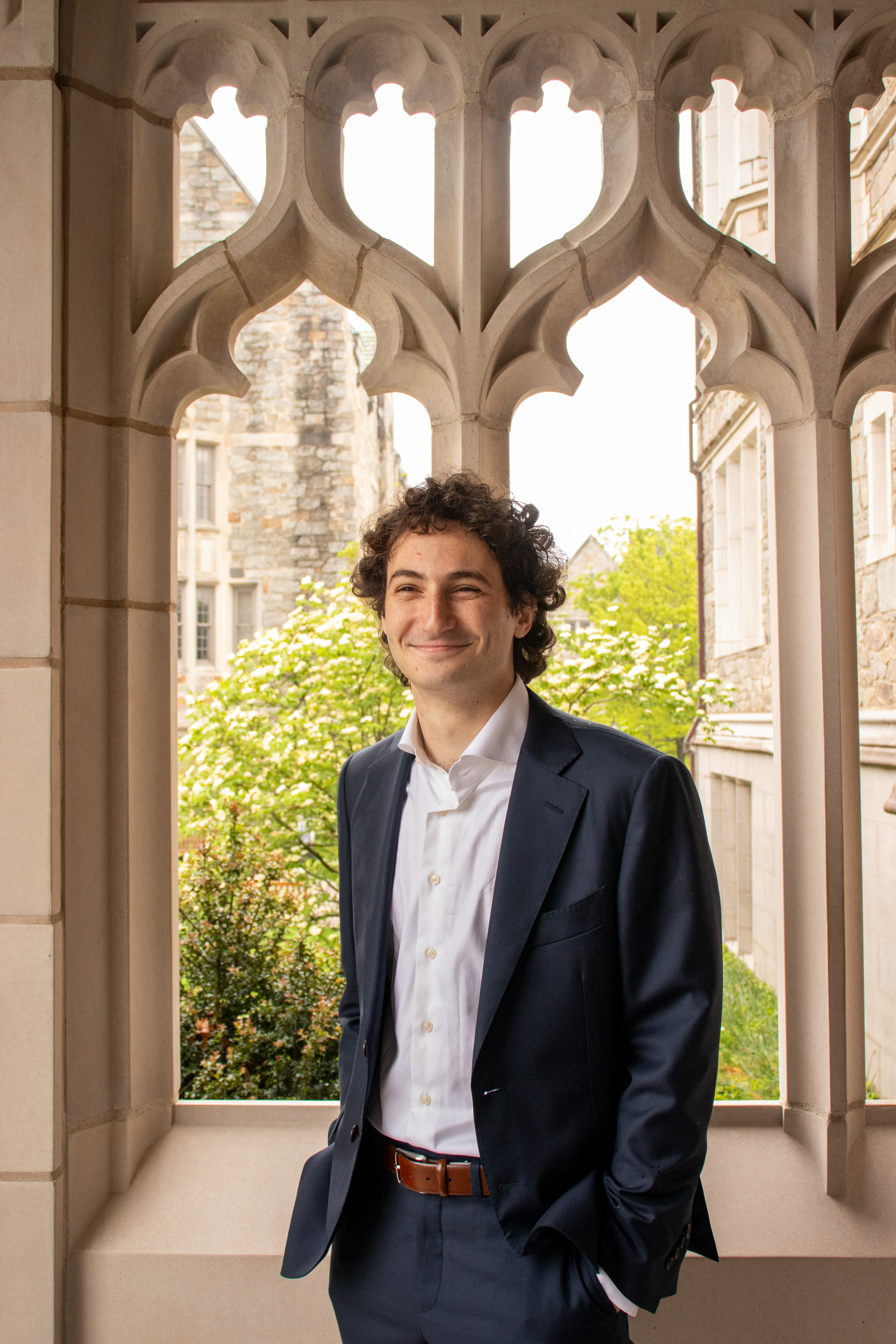
Hi! My name is Ethan and I’m a huge nerd about mathematics, biology, the environment, and everything in-between. I grew up on the Main Line of Philadelphia, attending both the Lower Merion School District and Friends’ Central School. Thanks to my supportive teachers, I was confident to reach well beyond my grade level, taking Calculus freshman year and several Penn courses during my high school career. Since then, I have made it my mission to help others through the subjects I love, whether they share my passion or must simply pass a required class. I even got a chance to teach a preparatory geometry course at my high school!
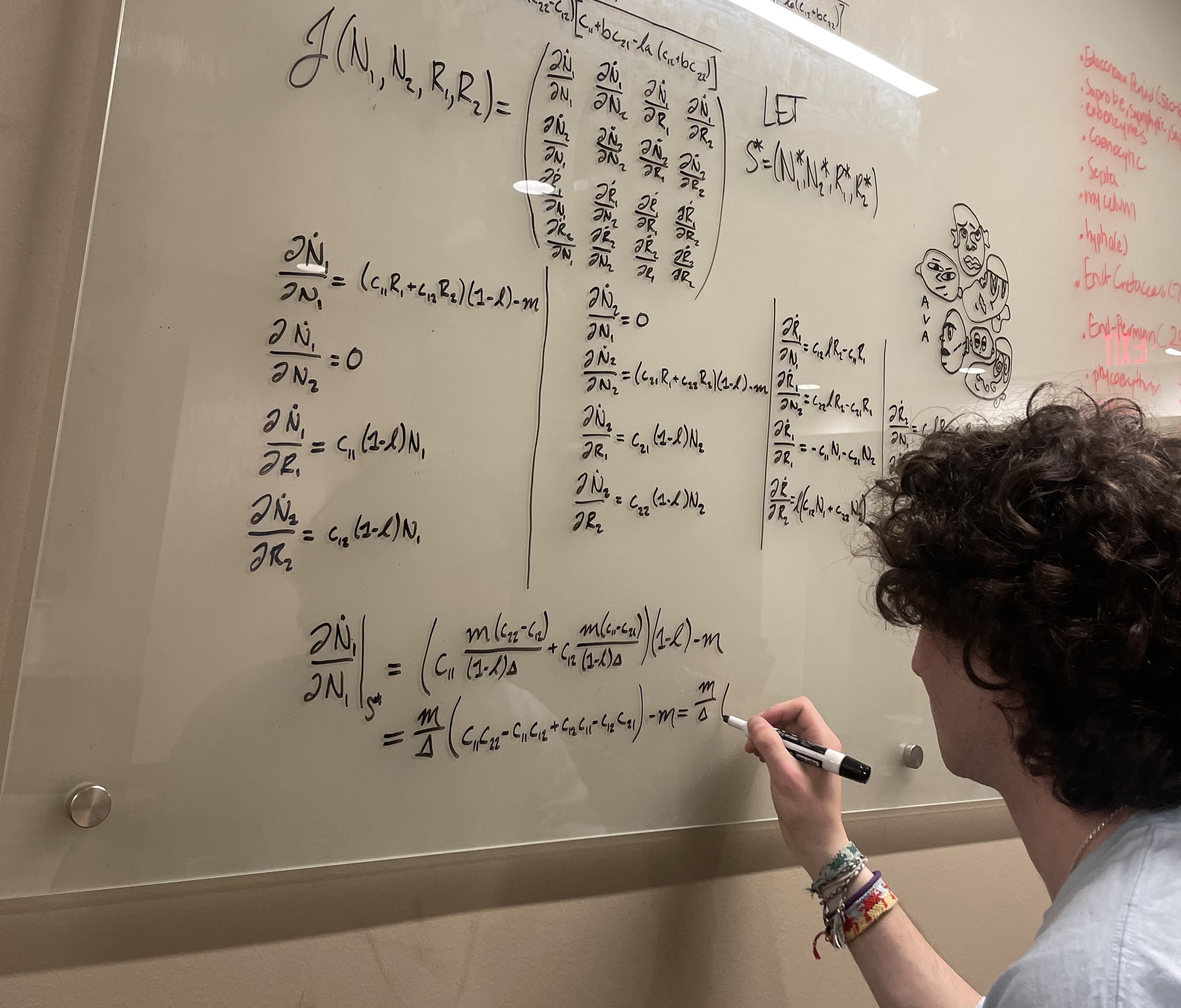
After graduating FCS, I attended Boston College in the Class of 2025. I continued to follow my interests, double majoring in mathematics and biology. In my sophomore year, I began research into an intersection these two fields, using mathematical models to simulate microbial community dynamics, such as those found in our gut microbiome. One key takeaway from this experience was that most people, even some PhDs, HATE talking about math! When equations are brought up, many people assume they cannot understand the topics at hand and shutdown. Thus, to explain the relevance of my research, I had to adapt. Read about my teaching philosophy below for more on this.
After graduating summa cum laude from BC, I decided to return to the Main Line, submit some of my undergrad research for publication, and apply to graduate school. In the meantime, I am excited to continue tutoring the next generation of students in mathematics, biology, and standardized testing!
Experience
I began tutoring at Friends’ Central through service work and helping my senior peers. After completing my senior project of compiling my notes from Calculus, Linear Algebra, and Differential Equations into a comprehensive study guide, I was invited to teach the Tricky Topics in Geometry course through the Summer Scholars program at FCS. To prepare incoming freshman for their upcoming geometry course, I designed a curriculum to pre-expose them to challenging topics they would face, such as triangle similarity and congruence, area and volume, and basic trigonometry. Taking place during COVID lockdowns, I recorded asynchronous lectures, compiled and gave feedback on problem sets, and held daily Zoom sessions to review the material and walk through any questions. While I found asynchronous work to be less engaging than the alternative, these virtual sessions revealed to me how helpful technology can be in teaching, both for illustrating concepts and improving accessibility when in-person instruction is impossible.
Upon matriculating at Boston College, I continued tutoring in the Math Learning Center drop-in hours. Here, students could bring their math questions from any class they were taking, from calculus to probability to linear algebra and more. Interfacing with students from a plethora of backgrounds, majors, and learning styles, I was able to refine my teaching style and keep those classes fresh in my mind. In addition to the Math Learning Center, I held private virtual tutoring sessions with high schoolers in the Newton area on topics in Algebra 2 and Precalculus.
Through these experiences, I became accustomed to adapting to the student’s learning style and illustrating concepts in various ways. For example, suppose you want to find the roots of a parabola. The most straightforward way is the quadratic formula, which will always output whatever roots may exist, but is a wholly unintuitive hodgepodge of letters and symbols. This method may be helpful for standardized tests, where time is of the essence, but less so if the student doesn’t understand what a root is. Another way to find roots is by visualizing the equation with a graphing calculator, which shows us exactly what a root is and where it exists. Helpful for intuition, but we can’t use a graphing calculator in many situations, and exams often ask for exact answers rather than decimals. One more method is factoring, which requires more advanced pattern recognition, but can be faster and more intuitive than either of the other two methods. Different methods are suitable to different students and situations, and I aim to first teach concepts for intuition, then formulas and tricks for tests.
Philosophy
I believe that great tutoring isn’t just about knowing the material, but knowing how to meet students where they are. Whether someone is deeply curious about the subject or just trying to survive a required class, I aim to make learning feel less like a chore and more like a conversation.
My teaching style is rooted in flexibility and empathy. I’ve worked with students across a wide range of backgrounds and learning styles, and I’ve learned that no single explanation works for everyone. I prioritize intuition first, then build toward formulas and test strategies once the foundation feels solid.
I also understand that math and science can feel intimidating. Even in my own research, I’ve seen how quickly people shut down when equations enter the chat. So I make it a point to keep things approachable, emphasizing analogies and visualization to bridge the gap between abstract concepts and real understanding.
Ultimately, my goal is to help students build confidence in both the material and their ability to learn, ask questions, and think critically. Whether proactively teaching the next unit’s material or exploring tricks to improve their SAT score, I believe it is my job to support each student’s journey with patience, clarity, and a healthy dose of nerdy enthusiasm.
Contact Me
When you are ready to discuss tutoring options, please use the inquiry form below.
 Ethan’s Tutoring Service